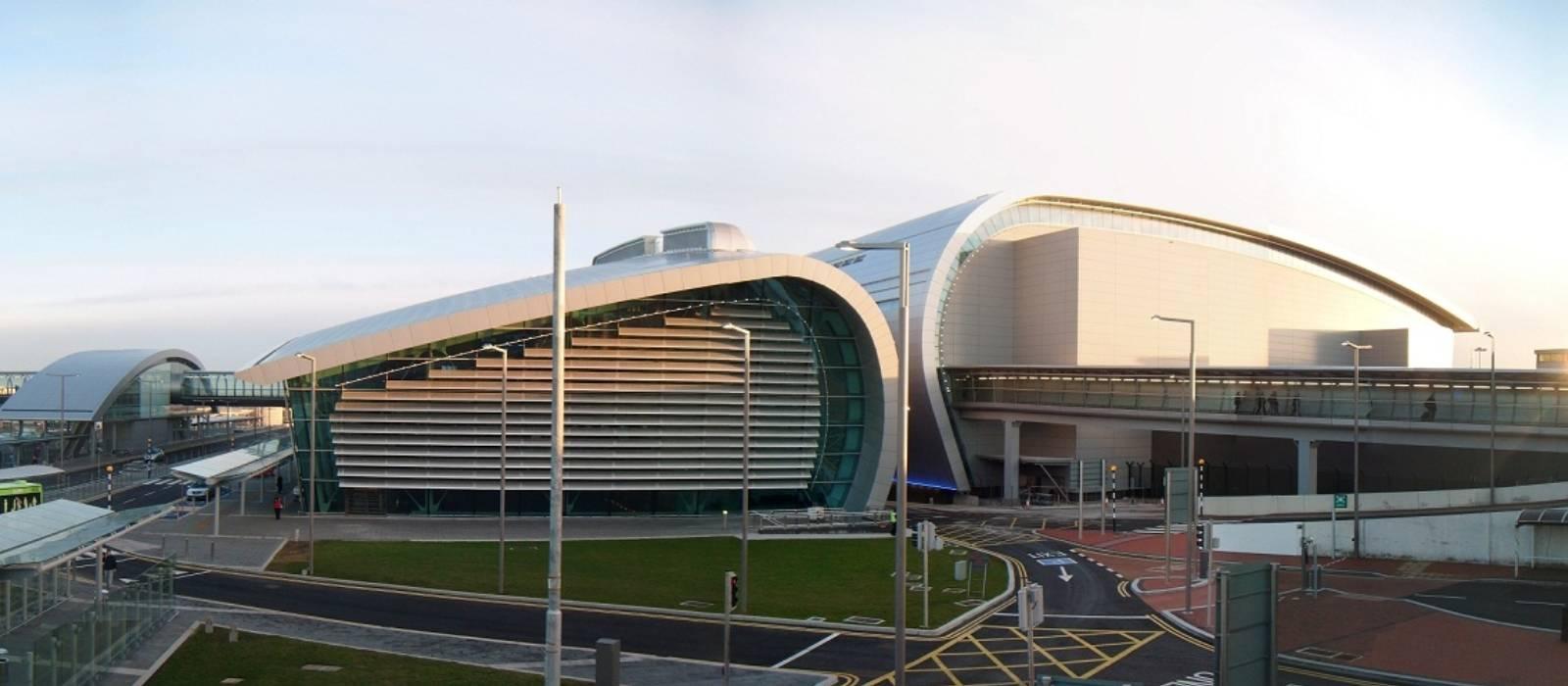
Wi-Fi at Dublin Airport (DUB) is free across all terminals. Join “Dublin Airport Wi-Fi”, then accept the terms on the sign-in page.
⏱️ Unlimited🛜 Provider: daa (Dublin Airport Authority)
Is there free Wi-Fi at Dublin Airport?
FreeYes. Free, unlimited Wi-Fi is available at Dublin Airport.
- Common SSIDs: Dublin Airport Wi-Fi, Dublin Airport Free WiFi
- Sign-in: No sign-up; tap Connect on pop-up
- Provider: daa (Dublin Airport Authority)
Wi-Fi Freshness
No approved traveler reports yetThis airport needs a fresh traveller report.
Be the first to verify this airport
Share a quick Wi-Fi report to help travellers with real-world speed, reliability and login details.
Submit a Wi-Fi Report
Takes about 30 seconds
Connection details
- Login: Click-through portal
- Security: OPEN • HTTPS portal
- Support: Dublin Airport – Wi-Fi & printing
Speed & reliability
Typical: —↓ / —↑ Mbps (Fast after recent upgrade; fine for streaming and calls)
Reliability: ★★★★★ — Airport-wide in Terminals 1 & 2
Based on ~19 samples
Travel tools
Useful upgrades for this trip
Backup mobile data
Need a backup to Dublin Airport Wi-Fi?
If the airport network feels slow, crowded, or unreliable, an eSIM can give you instant mobile data without hunting for a local SIM. It is one of the easiest fallback options for travellers at DUB.
Get travel dataTerminal specifics
- Terminal 1Wide coverage across gates and atrium
- Terminal 2Strong signal near US Preclearance gates
Power & places to work
Plug type: Type G
Voltage: 230V
USB-C: Varies
Charging points in seating zones; new bus info area with charging in T1 atrium
- Atrium seating & countersT1 (Transport Information Point)Seats + charging; real-time bus info
- Gate window countersT1/T2Power along windows/columns
How to connect at DUB
- Join "Dublin Airport Wi-Fi" or "Dublin Airport Free WiFi".
- Open a browser; if the portal doesn’t appear, visit a non-HTTPS page to trigger it.
- Complete any email/SMS step.
- Start your VPN, then browse normally.
Interesting Facts about Dublin Airport Airport
- Handled 33.3 million passengers through terminals in 2024, with 34.6 million total including connecting passengers.
- Ireland's main aviation gateway and transatlantic hub, with US border preclearance facilities.
- Two terminals of 100,000 sq. metres each; partners with 45 airlines serving over 190 destinations in 42 countries.
- Three runways: South Runway 10R/28L (8,652 ft, operational 24 hours), North Runway 10L/28R (10,203 ft, operational 07:00-23:00), and Crosswind Runway 16/34 (used occasionally in adverse weather).
- Opened in 1940 with inaugural flight to Liverpool on January 19; terminal building opened in 1941 and is now a listed building.
- Located 7 km (4.3 miles) north of Dublin city center in Collinstown, 3 km south of Swords.
- North Runway opened in August 2022 after construction began in 2016, enabling parallel runway operations.
- 13th busiest airport in Europe and busiest in Ireland, with over 200 weekly flights to the US serving 28 US destinations.
Last updated: 3/7/2026
New: 10-second traveller check
Quick Wi-Fi check for Dublin Airport
Don’t want to fill in the full report? Just tap a few quick answers. Even a tiny update helps keep this airport page fresh.
Submit a Wi-Fi report
Help keep Dublin Airport accurate for other travellers.